
Bevendean History Project

Stanmer from 1939 to 1953

In 1939 a National Register
was taken of the civilian population of England and Wales. The
survey was taken on 29 September 1939.
It recorded over 40 million people to help the government issue identity cards and ration books at the start of World War II.
The 1939 register for Stanmer shows that 75 people were resident in Stanmer Park and lived in 22 different houses from the Upper Lodges by the Ditchling Road to the Lower Lodges by the Lewes Road. Three people were listed as evacuees, 23 men were listed as farm workers or nurserymen, 5 people were listed as being at school and 14 records were closed as the people might still be alive in 2026. Census records have to be kept closed for 100 years.
The people living in Stanmer House were listed as: -
Augustus Harry Turner born on 7 Feb 1883 married occupation listed as a House Carpenter on a Private Estate.
Mary Turner born on 5 Feb 1890 married, occupation listed as a Housewife.
George Ernest Frederick Turner born on 21 Mar 1910 single working as a Market Gardener.
There were no other people recorded as living in Stanmer House at this time.
Betty Hawkey lived in the Farm house on the Stanmer Estate with her father Richard who farmed 700 acres around the village.
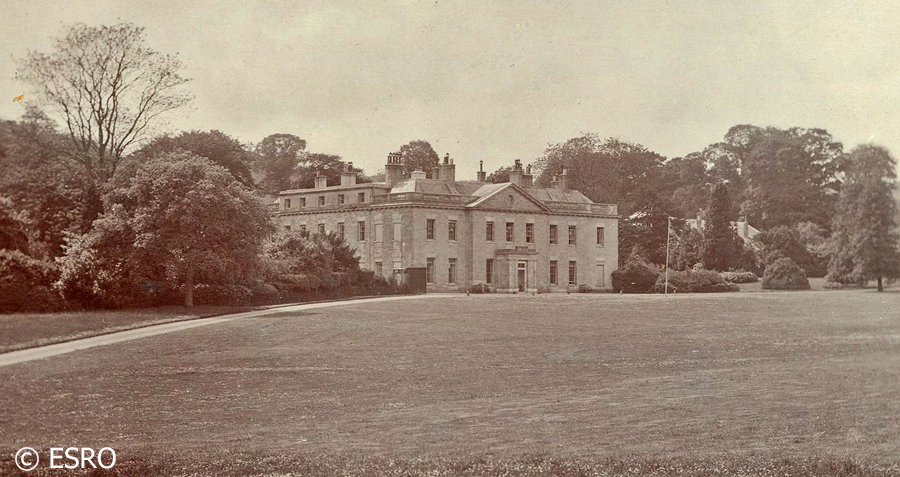
Stanmer House before the start of World War 2. Ref: CHR/25/4/26
The 1939 England & Wales Register of the People living at Stanmer
The Emergency Powers (Defence) Act came into force in August 1939 and the military were given wide powers to regulate, occupy and evacuate private estates and farming land across Britain. The requisitioning of rural land, at a time when farmers were directed by the state to maximise their output, was not done lightly, but the military needed land for training grounds, airfields, operational bases and prisoner-of-war camps.
On the South Downs the military took over a five-mile-wide strip running from Arundel in West Sussex to Wilmington in East Sussex and farmers and agricultural workers were expected to live cheek by jowl with guns, tanks, barbed-wire and men.
The fields east of Falmer had been used by the Territorials for military manoeuvres since the early 1930s. Soon after the war started British and Canadian soldiers arrived and were billeted in Stanmer Park.
On 31 March 1942 the War Department informed the Earl of Chichester that his estate was to be requisitioned on 15 May 1942. The military wanted Stanmer village and farm land as a training ground and firing range for the Canadian troops.
The requisition also required the evacuation of Stanmer village, which was designated for training in street fighting. All houses, cottages and buildings were to be vacated in just six weeks.
On the 30 June 1942 the Bishop of Chichester signed an order for the closure of Stanmer Church when the Stanmer Estate was requisitioned by the Army.
The Stanmer Church registers show that the church was not used from June 1942 until sometime in 1949, with the exception of the burial of John Buxton Pelham, VIII Earl of Chichester on the 26 February 1944, who was killed in a motor accident while on active service.
While Stanmer Church was closed there were about 140 baptisms, 80 marriages and 50 burials at Falmer Church.
Many people had lived in the village all their lives, as their parents and grandparents had done before them. They all had to leave and find somewhere else to live.
Standing Orders for the South Downs Battle Training Area stated that Stanmer House, the church and graveyard were out of bounds to the military, the church remained undamaged with Stanmer House being damaged by the Canadian troops billeted there.
Significant damage was done to woodland, which was used for training and as practice ranges for tanks firing live ammunition.
Parts of the parkland were dug up and replaced by areas of concrete to provide hard-standing for the heavy army vehicles and tanks and a 10,000-water basin.
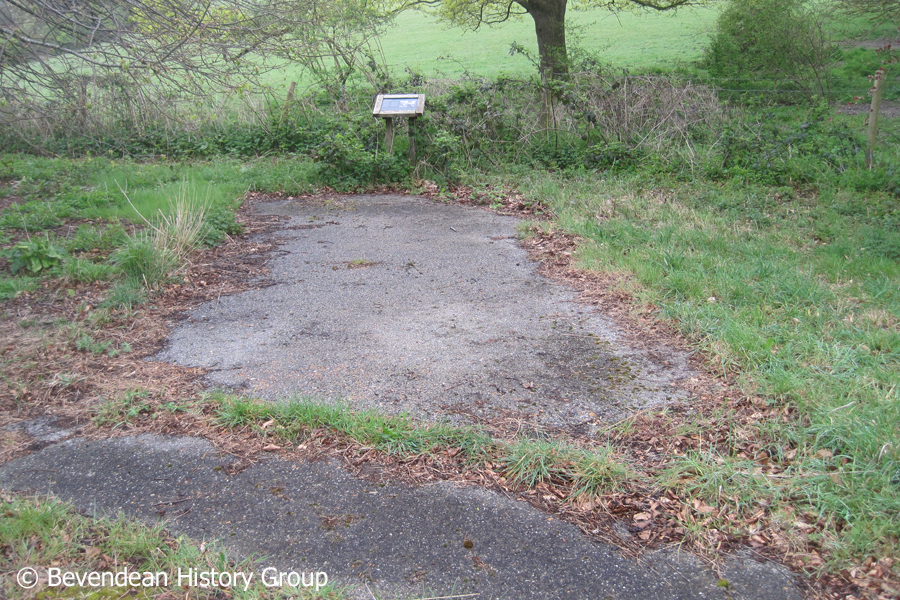
One of the surviving concrete tanks stands from World War 2 photographed in 2026.
The interiors of cottages along the village street were destroyed by street fighting, with hand grenades thrown through doors and windows.
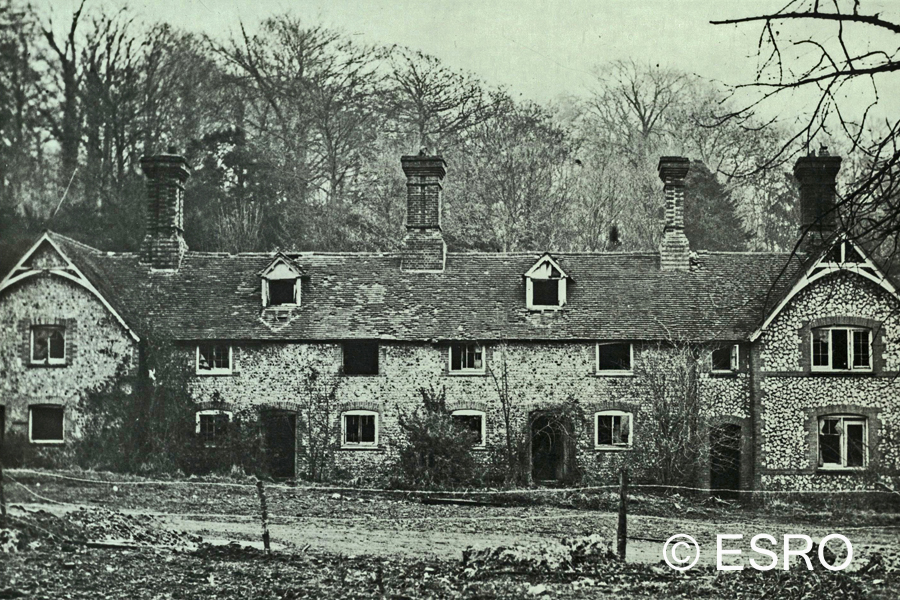
Some of the cottages in Stanmer village damaged during army training photographed in 1946 after the end of the war. Ref: HHA920197
Farm buildings suffered most with many being reduced to piles of rubble by barrages of heavy gunfire directed at them.
The need for so many training areas came to an end following the D-Day invasion and the South Downs was once again returned to agriculture.
It was then necessary to remove any unexploded ammunition, a job initially carried out by Polish troop, and then the Ministry of Agriculture assumed responsibility for cultivating the land until the time came for it to be handed back to its owners and tenants.
Due to the death of the 8th Earl of Chichester, killed whilst on active service in 1944, and substantial death duties levied, a large portion of Stanmer was sold to the Brighton Corporation in 1947.
The sale brought to an end over 230 years of ownership by the Pelham family and signalled the beginning of a new life for the Stanmer Park Estate.

The cottages repaired after the end of the war, c1953. Ref: HA916653
After the area had been cleared of unexploded ordnance by Polish troops, Brighton Corporation undertook a reconstruction to rebuild the ruined flint and brick cottages as close to their original state as possible.
Following the extensive post-war reconstruction of the cottages and park buildings the area was officially open to the general public in 1953.
It recorded over 40 million people to help the government issue identity cards and ration books at the start of World War II.
The 1939 register for Stanmer shows that 75 people were resident in Stanmer Park and lived in 22 different houses from the Upper Lodges by the Ditchling Road to the Lower Lodges by the Lewes Road. Three people were listed as evacuees, 23 men were listed as farm workers or nurserymen, 5 people were listed as being at school and 14 records were closed as the people might still be alive in 2026. Census records have to be kept closed for 100 years.
The people living in Stanmer House were listed as: -
Augustus Harry Turner born on 7 Feb 1883 married occupation listed as a House Carpenter on a Private Estate.
Mary Turner born on 5 Feb 1890 married, occupation listed as a Housewife.
George Ernest Frederick Turner born on 21 Mar 1910 single working as a Market Gardener.
There were no other people recorded as living in Stanmer House at this time.
Betty Hawkey lived in the Farm house on the Stanmer Estate with her father Richard who farmed 700 acres around the village.
Stanmer House before the start of World War 2. Ref: CHR/25/4/26
The 1939 England & Wales Register of the People living at Stanmer
The Emergency Powers (Defence) Act came into force in August 1939 and the military were given wide powers to regulate, occupy and evacuate private estates and farming land across Britain. The requisitioning of rural land, at a time when farmers were directed by the state to maximise their output, was not done lightly, but the military needed land for training grounds, airfields, operational bases and prisoner-of-war camps.
On the South Downs the military took over a five-mile-wide strip running from Arundel in West Sussex to Wilmington in East Sussex and farmers and agricultural workers were expected to live cheek by jowl with guns, tanks, barbed-wire and men.
The fields east of Falmer had been used by the Territorials for military manoeuvres since the early 1930s. Soon after the war started British and Canadian soldiers arrived and were billeted in Stanmer Park.
On 31 March 1942 the War Department informed the Earl of Chichester that his estate was to be requisitioned on 15 May 1942. The military wanted Stanmer village and farm land as a training ground and firing range for the Canadian troops.
The requisition also required the evacuation of Stanmer village, which was designated for training in street fighting. All houses, cottages and buildings were to be vacated in just six weeks.
On the 30 June 1942 the Bishop of Chichester signed an order for the closure of Stanmer Church when the Stanmer Estate was requisitioned by the Army.
The Stanmer Church registers show that the church was not used from June 1942 until sometime in 1949, with the exception of the burial of John Buxton Pelham, VIII Earl of Chichester on the 26 February 1944, who was killed in a motor accident while on active service.
While Stanmer Church was closed there were about 140 baptisms, 80 marriages and 50 burials at Falmer Church.
Many people had lived in the village all their lives, as their parents and grandparents had done before them. They all had to leave and find somewhere else to live.
Standing Orders for the South Downs Battle Training Area stated that Stanmer House, the church and graveyard were out of bounds to the military, the church remained undamaged with Stanmer House being damaged by the Canadian troops billeted there.
Significant damage was done to woodland, which was used for training and as practice ranges for tanks firing live ammunition.
Parts of the parkland were dug up and replaced by areas of concrete to provide hard-standing for the heavy army vehicles and tanks and a 10,000-water basin.
One of the surviving concrete tanks stands from World War 2 photographed in 2026.
The interiors of cottages along the village street were destroyed by street fighting, with hand grenades thrown through doors and windows.
Some of the cottages in Stanmer village damaged during army training photographed in 1946 after the end of the war. Ref: HHA920197
Farm buildings suffered most with many being reduced to piles of rubble by barrages of heavy gunfire directed at them.
The need for so many training areas came to an end following the D-Day invasion and the South Downs was once again returned to agriculture.
It was then necessary to remove any unexploded ammunition, a job initially carried out by Polish troop, and then the Ministry of Agriculture assumed responsibility for cultivating the land until the time came for it to be handed back to its owners and tenants.
Due to the death of the 8th Earl of Chichester, killed whilst on active service in 1944, and substantial death duties levied, a large portion of Stanmer was sold to the Brighton Corporation in 1947.
The sale brought to an end over 230 years of ownership by the Pelham family and signalled the beginning of a new life for the Stanmer Park Estate.
The cottages repaired after the end of the war, c1953. Ref: HA916653
After the area had been cleared of unexploded ordnance by Polish troops, Brighton Corporation undertook a reconstruction to rebuild the ruined flint and brick cottages as close to their original state as possible.
Following the extensive post-war reconstruction of the cottages and park buildings the area was officially open to the general public in 1953.
